
Introduction
Police Station Agent is a private defence website operated by Robert Cashman — NOT Kent Police. Legal services are delivered through Tuckers Solicitors LLP (SRA ID: 127795).
Motoring and driving allegations are often investigated at the police station. Matters such as drink or drug driving, dangerous driving, failing to stop, or driving without insurance can lead to an interview under caution. This page explains how such allegations are investigated at this stage, with a focus on interviews and document-based evidence. It does not discuss court outcomes; it describes the process at the police station.
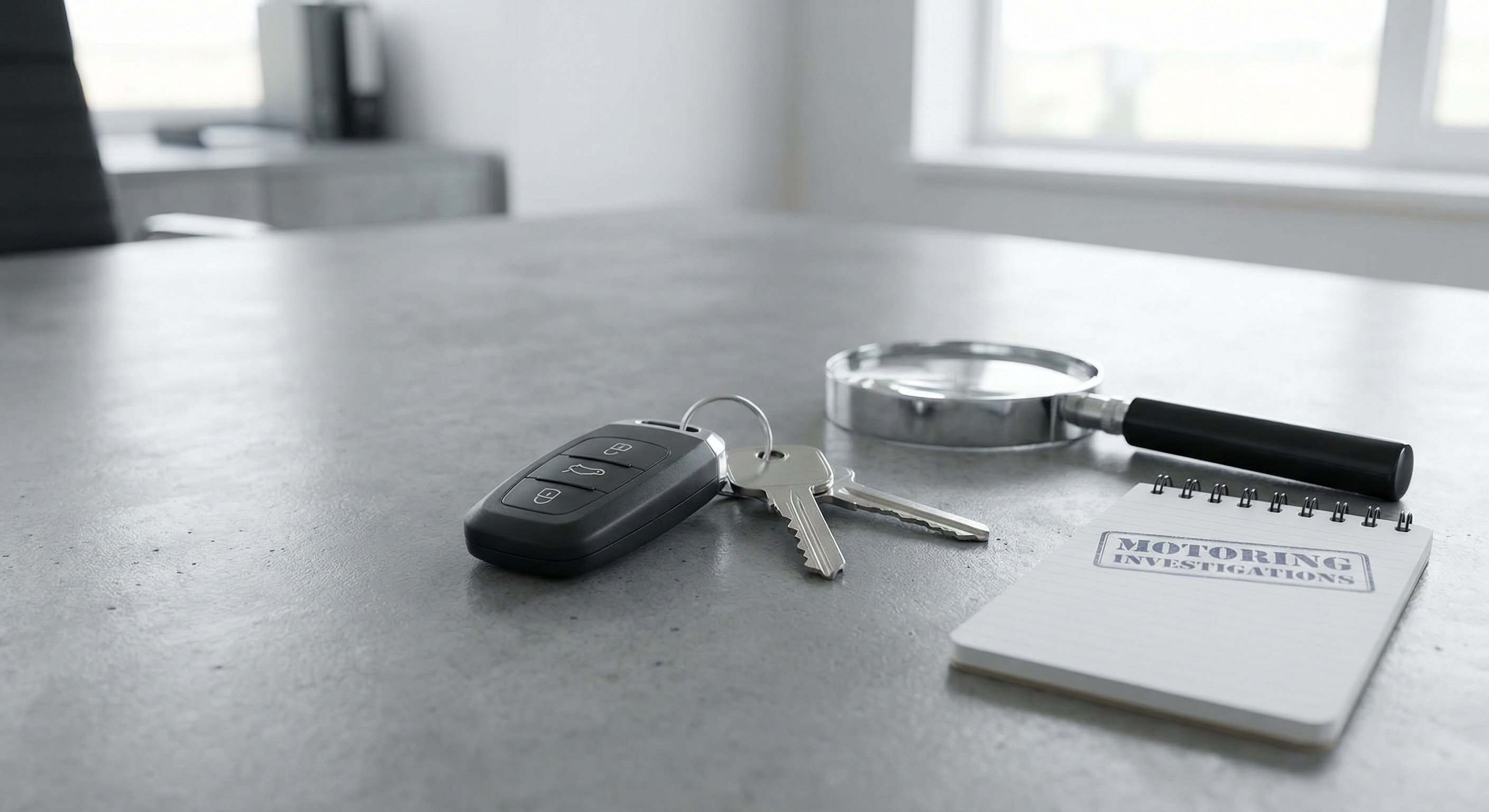
Interviews Under Caution and Driving Allegations
Some driving matters involve formal interviews under caution. You may be arrested at the scene—for example, after a positive breath test or a collision—and taken to the police station, or you may be invited to attend voluntarily at a later date. Either way, the interview is conducted under caution and recorded. What you say can be used in evidence.
Legal advice helps individuals understand their rights and the process involved. A solicitor can explain the allegation, the procedure (including any samples, tests, or documents), and how to approach the interview. Even when a matter may seem straightforward, what you say in interview can affect how the case is dealt with.
Document-Based and Other Evidence
Motoring investigations at the police station stage often rely on document-based evidence and other material. That can include breath or blood test results, collision reports, witness statements, CCTV or dashcam footage, and driving or insurance documents. The police will put this material to you in interview and ask for your account.
Understanding what evidence the police say they have, and how they may use it, is part of preparation. Before interview, the police should provide sufficient disclosure to allow legal advice. A solicitor can review it and advise you on what the investigation involves and how to respond.
Common Scenarios
Driving allegations investigated at the police station can arise in various scenarios: after a positive roadside or station breath test, following a collision, after a report of dangerous or careless driving, or in connection with documents (e.g. no insurance, no licence). In each case, the process is formal. You have the right to legal advice before and during the interview.
Legal advice helps individuals understand their rights and the process involved. Some driving matters involve formal interviews under caution; having advice ensures you know what to expect and how your response may be used.
Rights and Process
At the police station, you have the right to free, independent legal advice. For a summary of your rights in custody, see our dedicated page. The solicitor is not there to tell you what to say; they are there to explain the allegation, the procedure, and your options. They can be present during the interview and can intervene if necessary.
Understanding the process helps you make informed decisions. Police interviews and driving allegations often go together; legal advice helps individuals understand their rights and the process involved.
Police Interviews and Driving Allegations
Some driving matters involve formal interviews under caution.
Legal advice helps individuals understand their rights and the process involved.
For an overview of offence types at this stage, see our page on offences dealt with at the police station stage.
Conclusion
Motoring and driving allegations at the police station are investigated through disclosure and an interview under caution, often with document-based and other evidence. Legal advice helps individuals understand their rights and the process before they answer questions. For what may happen next, see our page on outcomes after a police interview. For a broader view, see our overview of types of offences commonly dealt with at the police station stage.
Sources
- GOV.UK — PACE Code C 2023 (accessible text)
- PACE 1984, section 58 — right to legal advice at the police station
- PACE 1984, section 76 — exclusion of confessions
- SRA register — Tuckers Solicitors LLP (127795)
General information only — not legal advice about any individual case. While every care is taken to keep information accurate, errors may occur and the law changes. Do not rely on this page instead of advice from a qualified solicitor. If you believe something is incorrect, contact us to report a content error. Statutory references and Code C paragraphs are summarised for readability; refer to the official published versions linked above.